Adult loneliness, described
Feeling lonely is not one state, and it is not the same at every hour of the day.
It changes with the hour, the season, and the room it happens in. This site describes those versions plainly — what each one is like, what it is made of, and where a page has to stop. No diagnosis, no figures without a source, and nothing that begins with “just get out more”.
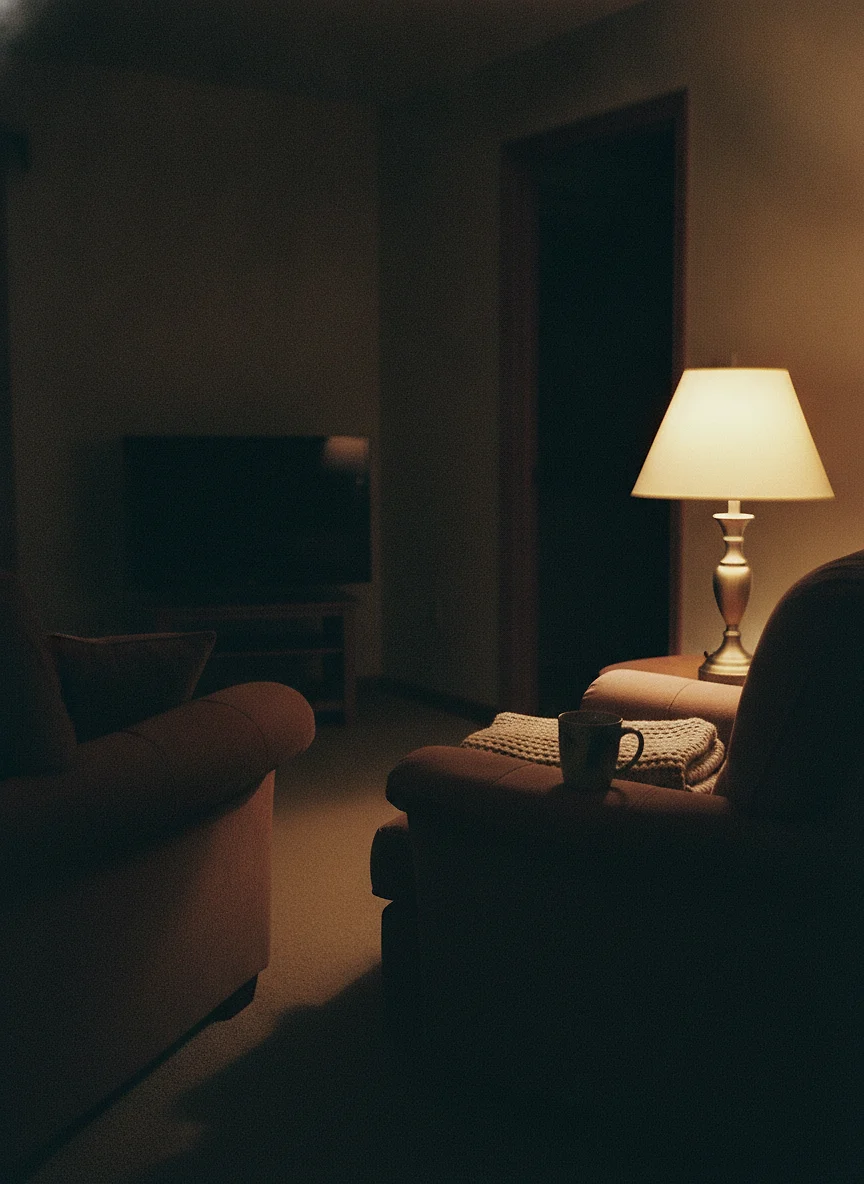
The day has a shape
- 7 a.m.
The easiest hour. There is somewhere to be, and being by yourself reads as ordinary rather than as evidence of anything.
Lonely, or alone? - 1 p.m.
A room with people in it. Talk about the work, the weather, the parking. Nothing missing that anybody present could name.
Together, and still lonely - 8 p.m.
The day stops asking anything of you. The evening has to be filled by somebody, and the phone gets checked without a reason.
When it hits - 2 a.m.
Nothing is covering it now. Nobody to text who would not mind being woken, and the thought arrives sounding permanent.
Why it gets loud after dark
Twenty-four hours, roughly. Not a schedule and not a measurement — these are the hours this site writes about, and yours will sit somewhere else.
It has more than one shape
One word covers several different states, and they do not answer to the same things. Recognising which one is in the room changes what would help — and explains why the general advice went past you.
- Emotional
One particular closeness is missing, and company does not stand in for it. The room fills up and the gap stays exactly where it was.
Kinds of loneliness- Social
No group to belong to. Known in several places, expected in none of them, and nothing on the calendar that would register an absence.
When a circle thins out- Existential
The sense that nobody can be inside a life with you. It arrives without a trigger and does not lift when the house is full.
Learning to be alone- Situational
It has a cause and a date attached: a move, a divorce, a retirement, a December, a Sunday with nothing in it.
When it hits
What the word points at
Loneliness is a distance, not a headcount
The word gets used as though it meant being by yourself, and that is why so much of the advice around it lands wrong. What people describe is a gap: between the contact a week actually holds and the contact that week wanted. The gap can open because the first mark moved — a friend leaves, a marriage ends, a job that came with people stops — or because the second one did, after an illness, a birthday, a bad year. Nothing has to have happened for it to be there.
- This is why a full house is one of the places it comes up. Rooms with people in them do not close a gap that was about one particular person.
- It is also why counting is no use. A calendar with something on every evening can sit next to the widest version of this, and an empty one next to none of it.
- And it is why the state moves during the day. The right-hand mark does not change at midnight, but everything that was covering the distance does.
Start where you actually are
Why the usual advice lands wrong
The advice names an activity. The state is made of a person.
Almost everything written about loneliness arrives as an instruction to do something — a class, a walk, a volunteering shift, an app. None of it is cruel and none of it is exactly wrong. It simply points at a different object than the one the state is built from, and that mismatch is what leaves people feeling that they followed the instructions and failed.
An instruction is not a mechanism
Being told to join something names the activity but not the part that would matter: whether anyone in the room ends up knowing anything about you. The first is arrangeable. The second is not on anyone’s schedule.
Repetition is doing the work, not novelty
What people describe as having helped is rarely the new thing. It is the same room, the same evening, the same faces, long enough that arriving stops being a decision.
Advice cannot see which state it is
The same sentence gets offered to somebody missing one particular person and to somebody with nowhere to belong. Those are different shortfalls and they do not close the same way.
Failing at it means nothing about you
A page that promises a method and then does not work leaves the reader carrying the failure. That is the main reason this site does not print methods.
A short note when something new is published
No spam, no cadence promised. Unsubscribe at any time.